When most people plan their van kitchen they assume gas is the only real option for cooking. It probably is the most common setup. But the moment you plumb gas into a van you are in certification territory: a registered gasfitter has to inspect and sign off the installation, and depending on where you are that process can be expensive, slow, or both.
Full electric is the obvious alternative. The problem is a van battery system is not a house. Running a full electric oven off 12V is not realistic for most builds. You would need a very large battery bank and a powerful inverter just to boil water quickly, let alone cook a meal.
What this guide covers
Why I Chose This Setup
Choosing the right cooking and hot water setup in my van was something I thought through carefully. I did not want to rely solely on battery power for everything. Running an oven off an inverter puts a significant load on your battery bank, and if something drains your batteries you lose your ability to cook and have hot water at the same time.
So I went hybrid. A 12V water heater for hot water, and a portable gas oven and stove for cooking. The gas unit is not plumbed into the van, which means it can be taken outside and used anywhere. On a good day I set it up outside the van, which is something a fixed installation can never do.
The other major reason was certification. Insurers insist on certified gas work for any fixed installation. By using a portable unit that connects directly to a gas canister, that requirement disappears entirely. No gasfitter, no inspection, no paperwork.
The Problem With Fixed Gas
Plumbing gas into a van means running copper or flexible gas line from a fixed bottle, usually in a vented external locker, through to a hob or oven. The fittings, connections, regulator, and ventilation all have to meet a specific standard, and someone licensed has to certify the whole thing before you can legally use it.
That certification is not just a piece of paper. It has implications for insurance, for renting a campsite, and in some countries for roadworthy inspections. If something goes wrong and you have uncertified gas work, you have a problem.
Beyond the paperwork, fixed gas is permanent. If the bottle is empty and you are in the wrong place, you wait. If a fitting develops a leak, you need someone qualified to fix it. The rigidity of the setup is real.
The Cooking Solution: Portable Gas
A portable gas stove and oven combination changes everything. Because it is not plumbed in, it is not subject to the same certification requirements. The canister attaches directly to the unit, you cook, and when it is empty you swap the canister. That simplicity is the point.
I use a combined portable gas stove and oven unit. It sits in the kitchen area of the van and works exactly like a regular hob and oven. Two burners on top, a full oven underneath. I have cooked roasts, baked bread, and used it daily for two years of full time van life without any issues.
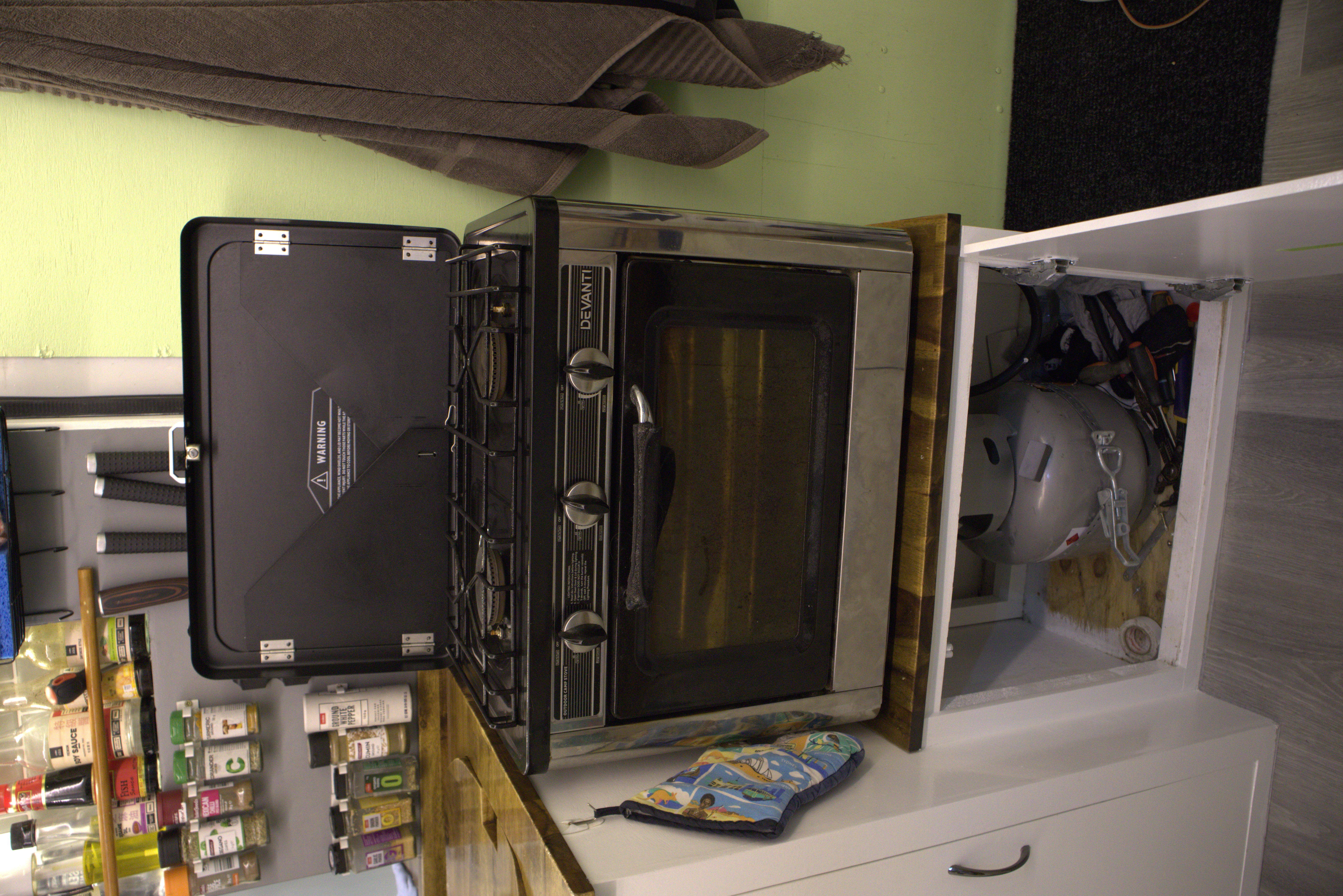
The portable gas oven and hob. No plumbing, no certification, and it cooks a full meal without any problems.
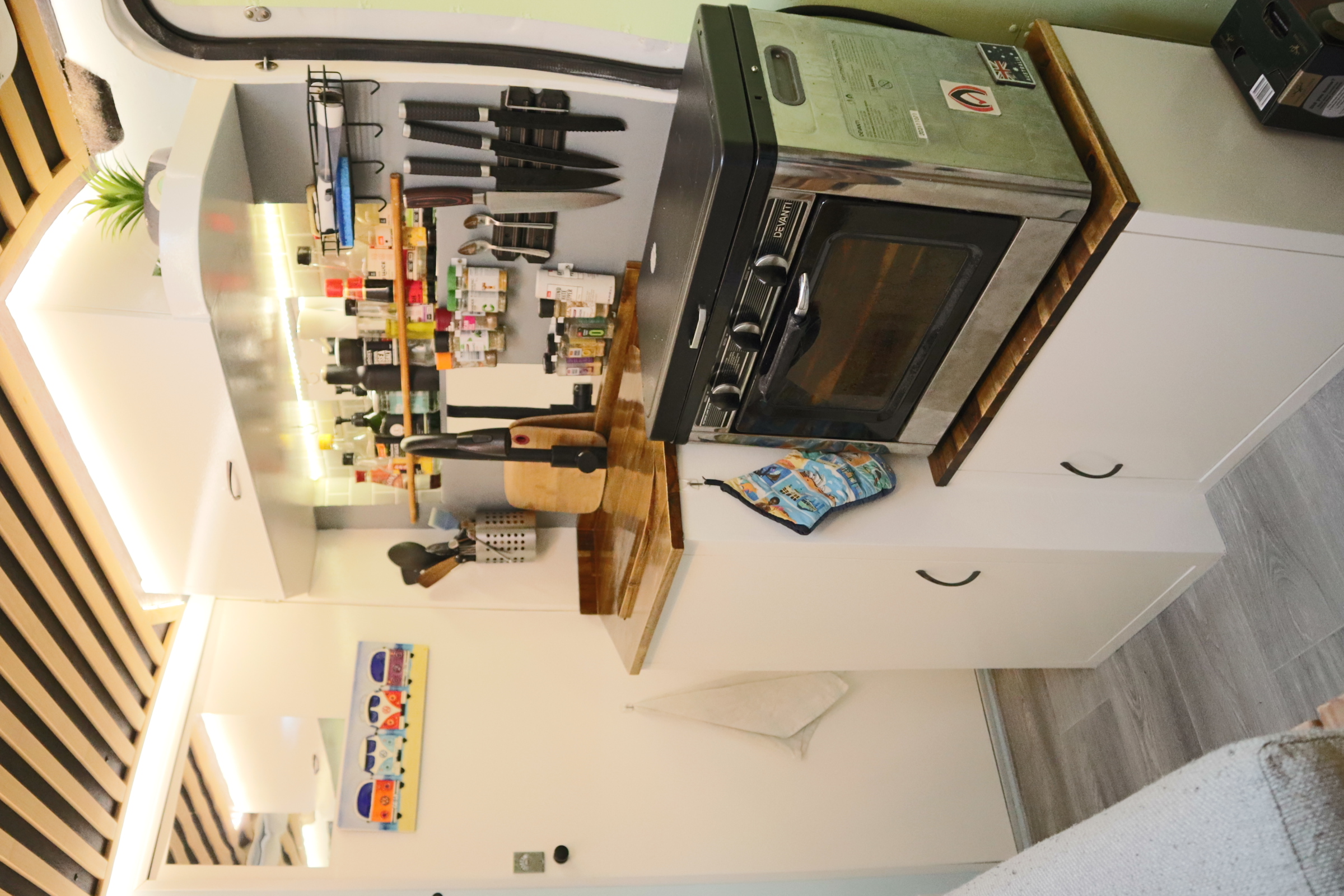
The kitchen set up for daily use. The oven sits in position secured by a clasp, and lifts out whenever I want to cook outside.
Ventilation still matters. Even with a portable unit, always crack a window or run the roof fan when cooking. Gas combustion produces carbon monoxide and moisture. A CO detector is worth having regardless of your setup.
The Hot Water Solution: 12V Water Heater
Hot water is where a lot of van builders get stuck. Propane water heaters are the traditional answer but they have the same certification issue as a fixed gas cooker. Instant electric water heaters need a lot of power. On-demand propane units that bypass certification are available but they add another gas canister to manage.
I use a 12V tank water heater. It runs directly off the van battery, heats over one to two hours, and gives you a full tank of hot water for showers and washing up. The version I use is dual voltage, which means it also switches to 240V shore power when plugged into a campsite. I turn it on during the day, and the water stays hot for hours depending on the temperature it is set to.
The draw on 12V is around 200W, which is well within what a standard van battery setup handles. I run mine on a switch so it only heats when I need it. Turn it on in the morning and it is ready well before you need it.
For US builders, a dual-power 12V/120V unit is now available on Amazon. When I first built this setup I could not find one in US listings. That has changed.
Gas Bottle Storage
With a portable setup the gas bottle question is simpler than with fixed gas, but you still need to think about where the canisters go when not in use.
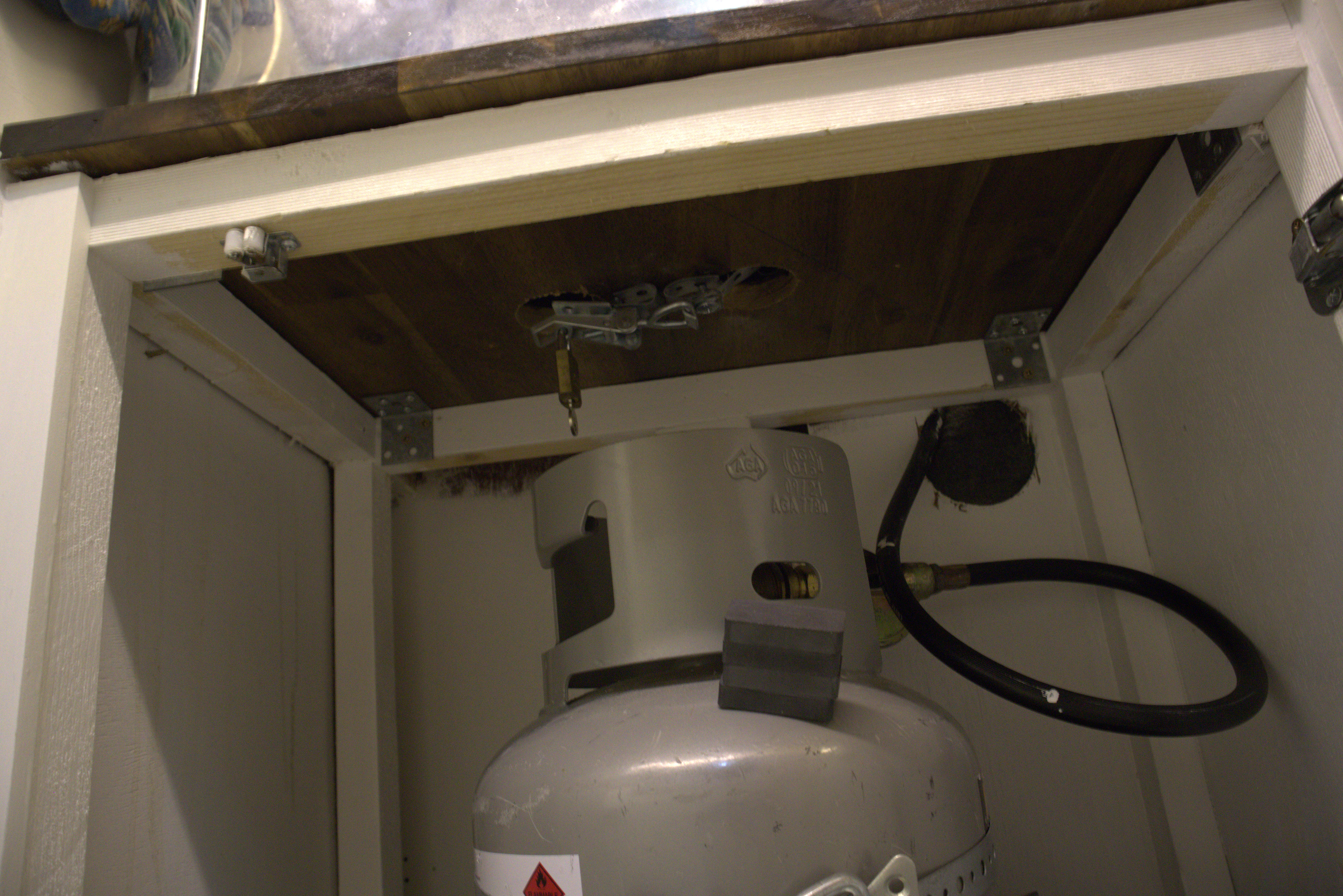
The gas bottle for the oven, secured by a clasp that releases easily. The oven is held by the same type of clasp so the whole unit can be unclipped and taken outside to cook.
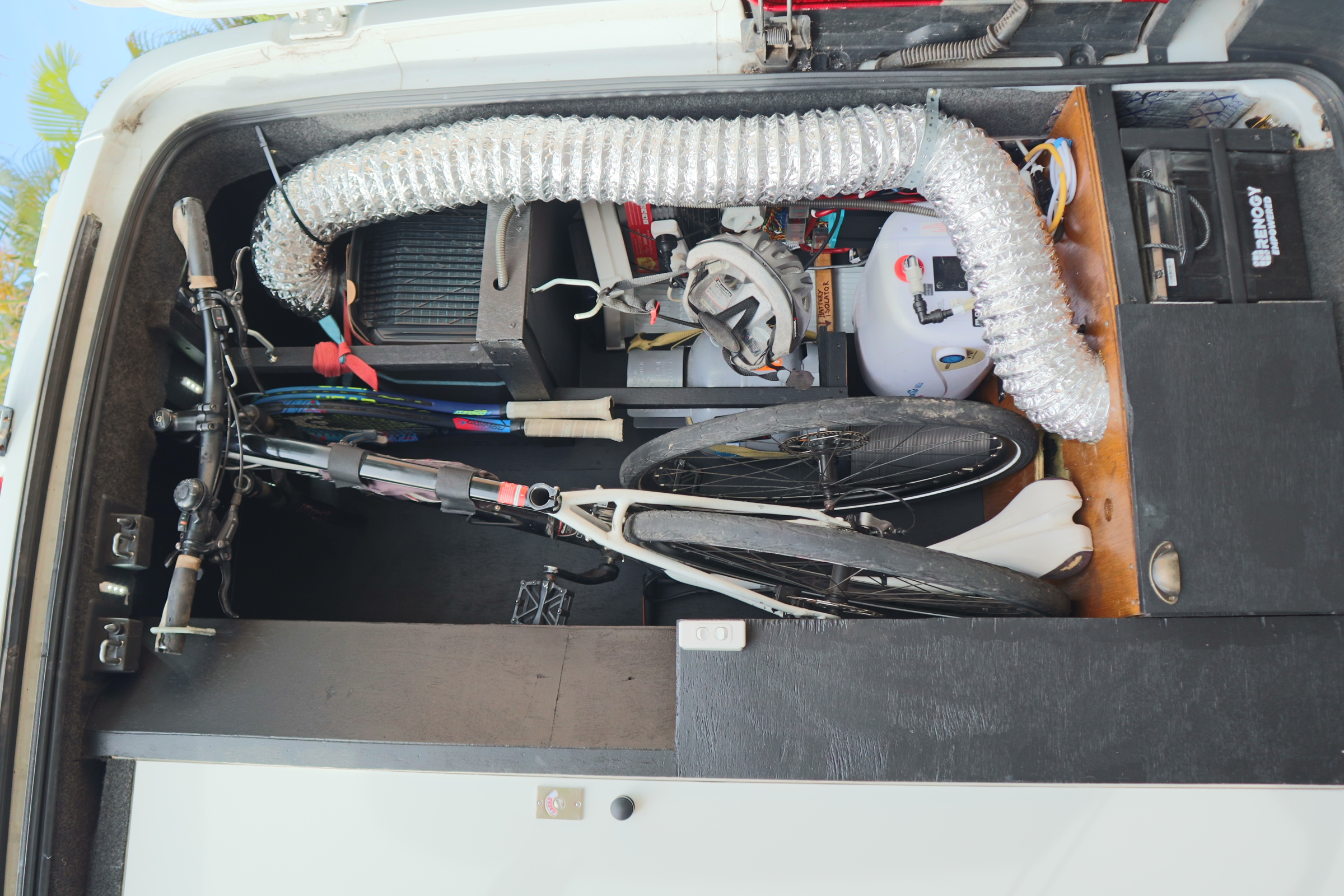
The garage area where the spare gas bottle is stored securely. The 12V water heater is mounted below.
In practice I keep one canister on the stove and a spare in the locker. A 4kg gas bottle lasts around four weeks of regular cooking. When it runs out, they can be refilled or swapped at camping stores, hardware shops, and service stations in most countries.
Honest Pros and Cons
| Setup | Pros | Cons |
|---|---|---|
| Fixed plumbed gas | Powerful, large bottle capacity, less reliance on batteries | Requires certification, insurers insist on it, permanent, harder to service |
| Portable gas stove and oven | No certification, can be used outside the van, 4kg bottle lasts 4 weeks, refillable almost anywhere | Smaller canister format in some countries, need to manage spare bottles |
| Full electric cooking | No gas at all, clean | Very high power draw, needs a large battery bank and powerful inverter |
| 12V water heater | No certification, low draw, works off-grid, water stays hot all day at your set temperature | Takes 1 to 2 hours to heat, tank capacity limited |
Two years of full time living on this setup. The portable gas has never let me down, and the 12V hot water is something I would not change. The slow heat time becomes a non-issue once you build it into your routine. Turn it on in the morning and forget about it.
If you want hot water and a working kitchen in your van without the certification process and without draining your batteries, this is the setup I would recommend.
Get the Full Plumbing Guide
Every part you need for fresh water, hot water, and grey water. US and AU parts lists included.
This page contains affiliate links. If you purchase through them we may earn a small commission at no extra cost to you. See our affiliate disclosure.