1. Your daily power use
List what you will actually run: fridge, lights, fans, laptops, pumps and any high-draw appliances. This gives you a sensible starting point for battery and solar planning.
Use the battery sizing guide →Use this page to make the big decisions first: battery storage, solar, alternator charging, inverter and shore power. The full technical guide is available after signup once you are ready for diagrams, parts and installation detail.
Drop your email below and I’ll send you access to the full technical guide library.
You’ll get access to the guide library after signup, including the electrical and plumbing technical guides.
A good van electrical system starts with your actual use, not a shopping list. Work out what you need to run, how long you stay off-grid, and how you will recharge before choosing batteries, solar panels or cable sizes.
Your house battery stores energy. Solar panels charge it through an MPPT controller, and a DC-DC charger can recharge it while you drive. Your 12V loads run through properly protected circuits; an inverter is only needed for appliances that genuinely require mains-style power.
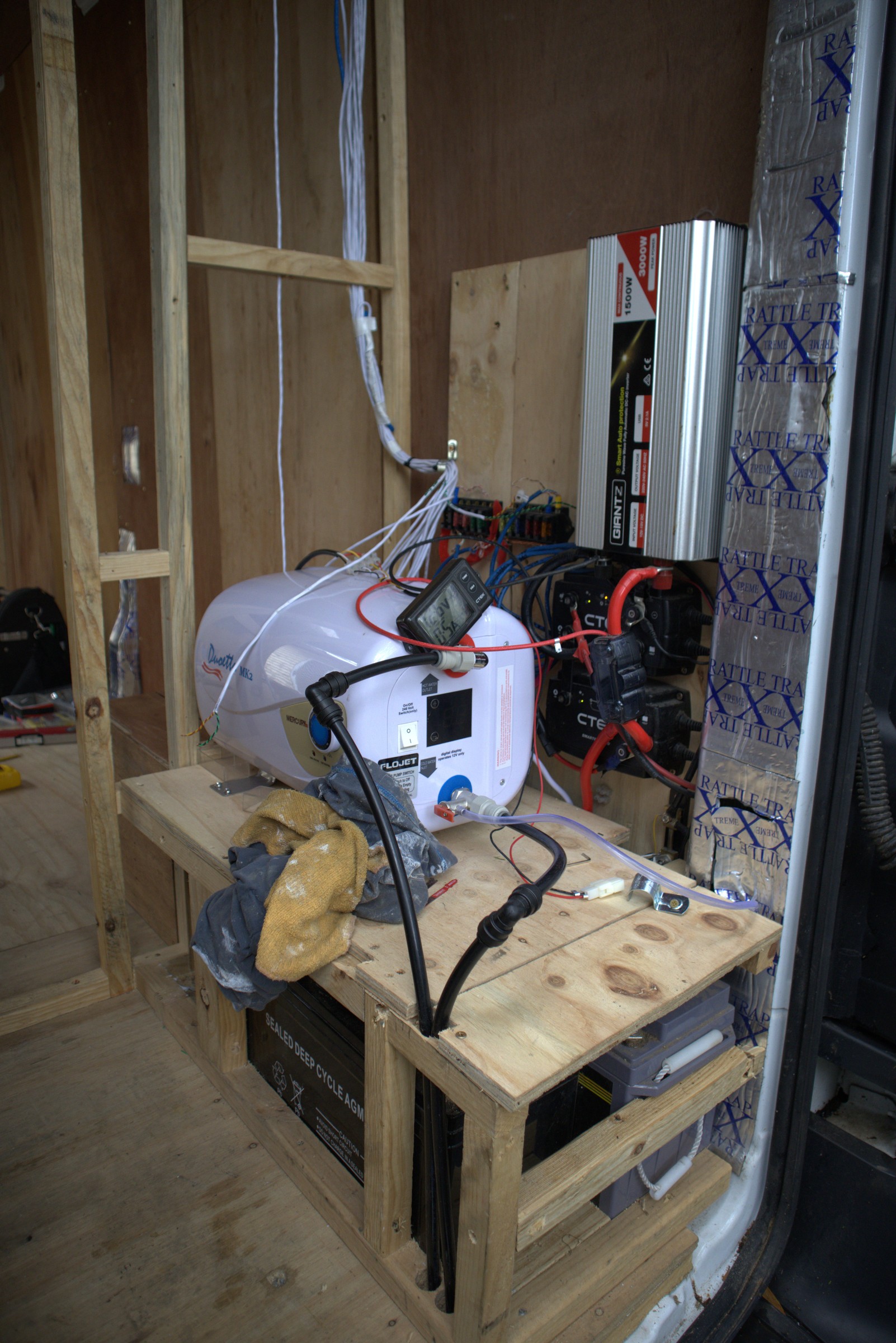
These choices determine the rest of the system. They are planning questions, not a substitute for a design specific to your van and equipment.
List what you will actually run: fridge, lights, fans, laptops, pumps and any high-draw appliances. This gives you a sensible starting point for battery and solar planning.
Use the battery sizing guide →Solar helps when parked; a DC-DC charger helps while driving. Most off-grid builds use both, but the balance depends on your travel pattern and roof space.
Read the DC-DC charger guide →Do not add large mains-powered loads by default. Decide what must run from an inverter, then allow for its demand in the wider battery and charging plan.
Try the solar calculator →Keep the 12V planning separate from mains work. Shore-power connections, inverter outputs and mains outlets need the right design and professional inspection.
Start with the free build guide →I rebuilt and upgraded my van electrical setup over several years. The expensive mistakes came from trying to decide the system as I installed it. Planning the loads, charging sources, access for servicing and protection first makes the build far easier to troubleshoot later.
Work through roof space, daily use and realistic charging expectations before buying panels.
Read solar sizing →Estimate usable storage for your day-to-day van loads.
Read battery sizing →Understand alternator charging and why it needs planning alongside solar.
Read the DC-DC guide →Follow the wider build order before moving into the technical guide.
Read the free build guide →This guide is for DIY van builders who want a real-world electrical plan, not a vague list of components.